

Sprinter Van Winter Readiness: A 6-Point Checklist for Wenatchee Fleets
For a commercial Sprinter fleet, winter preparation is more than another item on the maintenance calendar. It is a business decision.
A van that will not start at 6 a.m., loses traction on Blewett Pass, or cannot clear a fogged windshield can quickly become an expensive problem. One disabled vehicle may mean missed appointments, delayed deliveries, a rental van, overtime for another driver, and unhappy customers.
Wenatchee winters bring freezing temperatures, frost, ice, snow, and demanding mountain routes over Blewett, Stevens, and Snoqualmie passes. The best approach is proactive: inspect the systems most affected by cold weather before they fail, then schedule repairs during a planned service window instead of during peak operating hours.
Use this six-point checklist for your commercial, RV, or personal Mercedes-Benz Sprinter.
1. Load-test the battery and charging system
Cold weather exposes weak batteries quickly. A battery may start a van reliably in October but fail when temperatures drop and engine oil becomes thicker.
Ask for more than a quick voltage check. A proper winter inspection should include:
- Battery load testing
- Cold-cranking performance
- Alternator output under load
- Battery terminals, cables, and grounds
- Starter operation and cranking speed
- Auxiliary battery condition, if equipped
Cold cranking amps, or CCA, describe how much starting current a battery can provide in cold conditions. The number printed on a battery is not the same as its actual performance after years of heat, vibration, and repeated discharge.
If a driver reports slow cranking, flickering lights, repeated jump-starts, or several attempts before the engine catches, do not wait for the first hard freeze. A borderline battery can become a no-start call overnight.
A battery replacement for a Sprinter commonly falls in the range of $180 to $350, depending on the battery type and installation requirements. A charging-system or starter repair may cost more. For a fleet, that planned repair is usually far less expensive than a roadside call and a missed day of work.
2. Winterize diesel fuel and understand DEF
Diesel fuel can develop wax crystals in low temperatures. This process, sometimes called fuel gelling, restricts the fuel filter and reduces fuel flow. The van may crank without starting, lose power, or stop under load.
Before winter, verify:
- The van is receiving the correct ultra-low-sulfur diesel
- The fuel filter is clean and due for replacement
- Water contamination is not present in the fuel system
- Drivers are using reputable fuel suppliers
- The tank is not routinely left nearly empty
- Any anti-gel product is approved for that specific Sprinter and used according to the owner’s manual
Do not add gasoline, kerosene, or unapproved chemicals to diesel fuel. Mercedes-Benz warns that the wrong fuel or additive can damage the injection and emissions systems. Depending on the model, a fuel filter service may cost approximately $150 to $350. A neglected restriction can contribute to more expensive fuel-system problems.
DEF, or Diesel Exhaust Fluid, is a separate fluid used by the emissions system. Standard DEF freezes at approximately 12°F (-11°C). That is normal. Sprinter systems are designed with heated tanks and lines so the fluid can thaw as the vehicle operates.
The important rules are simple:
- Keep DEF clean and properly sealed.
- Do not dilute it.
- Never add antifreeze or other chemicals.
- Refill it before the dashboard countdown becomes urgent.
- Have DEF heater, pump, sensor, or wiring warnings diagnosed promptly.
A DEF fault may eventually trigger a no-start countdown or reduced-power condition. That is a poor time to discover that a van has been operating with a warning for several weeks.
For model-specific operating-fluid requirements, review the Mercedes-Benz Sprinter operator’s manual or ask a qualified technician.
3. Check glow plugs and the entire cold-start system
Glow plugs are electric heating elements that help a diesel engine generate enough heat to start in cold conditions. They are not spark plugs, and they do not ignite fuel in the same way a gasoline spark plug does.
A cold-start inspection should consider:
- Glow plug resistance and operation
- Glow plug control module
- Wiring and connectors
- Intake-air temperature readings
- Engine coolant temperature sensor
- Starter cranking speed
- Fuel pressure during startup
- Auxiliary or stationary heater operation, if equipped
One failed glow plug may cause only a slightly rough start. Several failed plugs or a faulty control module can cause extended cranking, white smoke, hard starting, or a no-start condition when the temperature drops.
Do not rely on a dashboard light alone. A warning may not appear until the system has deteriorated significantly. A proper Sprinter vehicle repair inspection combines scan-tool data with electrical and mechanical testing.
A cold-start diagnostic visit may cost roughly $150 to $300, while replacing glow plugs or a control module can range from $300 to $1,000 or more, depending on access, parts, and the number of components involved. The exact estimate should be based on testing rather than guesswork.
4. Inspect tires, traction, and brakes for mountain routes
A loaded Sprinter behaves differently from a passenger car on ice and snow. Its height, weight, and cargo distribution affect braking, steering, and stopping distance.
Before winter routes, inspect:
- Tread depth and tire age
- Tire pressure when cold
- Sidewalls for cracking, bulges, and damage
- Correct load rating
- Spare tire and mounting equipment
- Wheel alignment and suspension components
- Brake pad and rotor thickness
- Brake fluid condition
- ABS and stability-control warning lights
- Four-wheel-drive or all-wheel-drive operation, if equipped
Look for tires marked M+S or, for more severe winter conditions, the 3-Peak Mountain Snowflake symbol. The tire must also have the correct load rating for your Sprinter and its cargo.
On long descents, avoid riding the brake pedal continuously. Use an appropriate lower gear and brake firmly in controlled intervals to reduce heat buildup and the risk of brake fade, which occurs when overheated brakes lose stopping power.
A basic brake inspection may be relatively inexpensive, but worn pads, damaged rotors, or contaminated brake fluid can turn into a $500 to $1,500 repair depending on the axle and parts selected. That is a manageable service window compared with an emergency repair on a mountain route.
For more guidance on preparing for grades and long descents, review our article on mountain driving preparation.
5. Verify heating, defrosting, and driver-comfort systems
A working heater is not just about comfort. It is part of safe winter operation.
Your driver needs to clear frost and interior fog quickly while maintaining a reasonable cabin temperature during long routes. Check:
- Heater output at idle and while driving
- Windshield defroster direction and airflow
- Blower motor speeds
- Cabin air filter condition
- Rear heat or cargo-area ventilation, if equipped
- Seat heaters and auxiliary heating
- Windshield wipers and washer nozzles
- Winter-rated washer fluid
- Headlamps, brake lights, and marker lights
Weak heat may point to a low coolant level, restricted heater core, thermostat problem, air in the cooling system, or a climate-control fault. A blower that works only on some speeds may have a failing resistor or control module.
For commercial drivers, small comfort problems can become safety and productivity problems. Cold, fogged glass slows departures and increases fatigue. Add these checks to the same appointment as your battery, coolant, and tire inspection rather than treating them as separate emergencies.
6. Test coolant protection and prevent freeze-ups
Coolant, also called antifreeze, protects the engine from both freezing and overheating. It also helps resist corrosion inside the cooling system.
A winter coolant service should include:
- Freeze-protection testing
- Coolant level and condition
- Correct Mercedes-approved coolant type
- Radiator, hose, water pump, and thermostat inspection
- Expansion-tank and cap inspection
- Leaks around the engine and heater circuit
- Windshield washer fluid rated for freezing temperatures
Mercedes-Benz specifies that many Sprinter cooling systems require approximately 50% antifreeze concentration, providing protection near -35°F (-37°C). Concentrations and specifications vary by model, so do not simply top off with a random universal coolant.
A coolant flush may cost approximately $150 to $300, while a leak, thermostat, water pump, or radiator repair can range from $300 to $1,500 or more. An overheated diesel engine can create a much larger bill. Our guide to coolant flushes and antifreeze testing explains why testing matters before the temperature drops.
Also inspect the van’s winter freeze-up points:
- Sliding-door tracks
- Door latches and hinges
- Rubber door seals
- Rear-door seals
- Electrical connectors exposed to road spray
- Underbody shields and panels
- Brake and fuel lines
- Ice or packed snow around the wheel wells
Clean and dry door seals, then use a product approved for automotive rubber when appropriate. Never force a frozen sliding door or electric step. Doing so can damage cables, motors, switches, or seals.
Plan fleet service before peak winter demand
The most effective winter strategy is to schedule each van into a planned service window. A fleet does not need every vehicle out of service at once. Rotate them through inspections before severe weather arrives, record the results by vehicle identification number, and prioritize vans with weak batteries, worn tires, overdue filters, warning lights, or hard-start symptoms.
Downtime costs vary widely, but a commercial van can easily cost a business $300 to $1,000 or more per day in lost work, replacement transportation, missed routes, and labor disruption. A major emissions or aftertreatment repair can reach $3,000 to $5,000, particularly when a problem is ignored until a diesel particulate filter or related system becomes severely restricted.
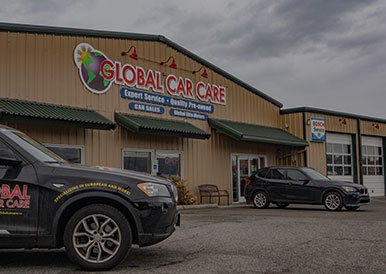
Global Car Care provides complete auto repair and maintenance in Wenatchee for Sprinter vans, diesel trucks, European vehicles, and domestic vehicles. Our ASE-certified technicians bring more than 70 years of combined experience, and we are a NAPA Auto Care Center using quality parts backed by a 3-year/36,000-mile nationwide NAPA warranty on qualifying repairs.
We also offer shuttle service and loaner cars when available, same-day service when possible, and flexible financing with six months at 0% interest on repairs over $299 for qualified customers through CFNA and Bosch.
Do not wait for the first icy morning to find out which van is not ready. Contact Global Car Care to schedule a winter readiness inspection for your Sprinter or fleet in Wenatchee and the surrounding valley. A planned service appointment now can help keep your drivers moving when the passes, roads, and schedule are least forgiving.